GOOGLE PENGUIN UPDATE
The Google Penguin Update is a change made by Google to stop websites from using spammy link-building tricks to rank higher in search results.
🐧 Simple Meaning:
Google Penguin checks if a website is trying to cheat Google by using:
-
Buying backlinks
-
Getting too many fake links
-
Using the same keyword again and again
-
Creating low-quality or spammy links
If a website breaks the rules, Google lowers its ranking or removes it from search results.
📅 When Did It Start?
The Penguin Update was first launched in April 2012.
🎯 Why Is It Important?
It helps Google show:
- High-quality websites
- Real and useful content
- Honest SEO practices
🤔 Why Was the Penguin Update Created?
Before 2012, many websites used bad tricks to rank higher on Google. Some common tricks were:
-
Buying links from other websites
-
Getting too many fake backlinks
-
Using the same keyword again and again (keyword stuffing)
-
Creating spammy content
These tricks helped websites appear on the first page of Google, even if their content was not good.
So, Google created the Penguin Update to punish such websites.
💡 How to Stay Safe from Penguin Penalty
Here are simple tips:
1️⃣ Build Natural Backlinks
Get links from real and relevant websites.
2️⃣ Do Not Buy Links
Buying links can hurt your website.
3️⃣ Avoid Keyword Stuffing
Use keywords naturally in your content.
4️⃣ Create High-Quality Content
Write helpful and original content for users.
🎯 Final Words
The Google Penguin Update was made to make search results fair and clean. It helps users find good and useful websites.
If you focus on:
-
Quality content
-
Natural backlinks
-
Honest SEO practices
You do not need to worry about Penguin.

PANDA UPDATE

Google Panda Update
Introduction
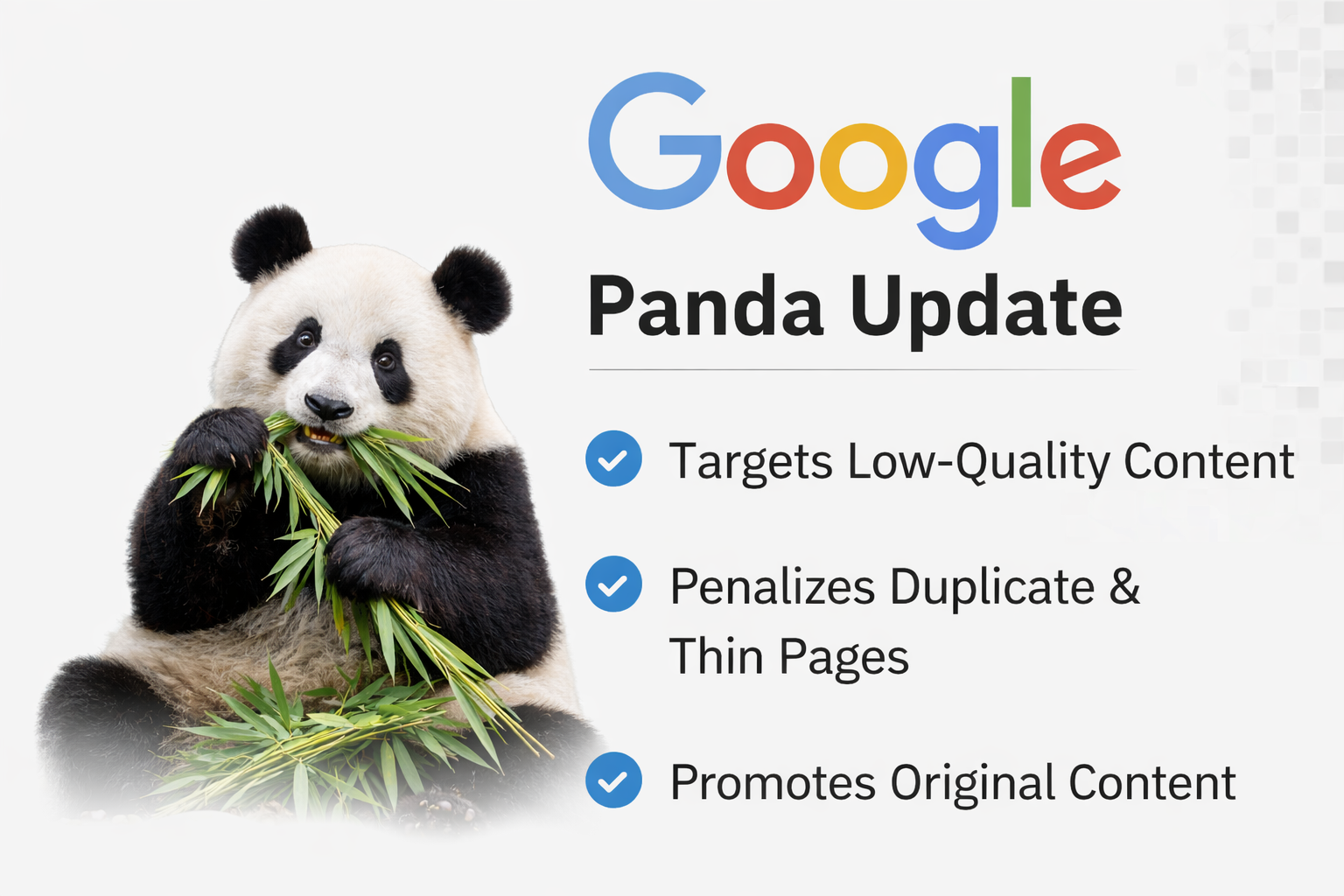
The Google Panda Update is an important change made by Google to improve the quality of search results. This update focuses on content quality. It helps Google remove websites that have low-quality, copied, or thin content and promotes websites that provide useful and original information.
What is Google Panda Update?
The Google Panda Update is a change in Google’s search algorithm that targets websites with poor-quality content. It reduces the ranking of websites that have duplicate content, too many ads, or very little useful information.
Google first launched the Panda Update in February 2011.
Why Was the Panda Update Introduced?
Before Panda, many websites ranked high on Google even though they had:
-
Copied content from other websites
-
Very short or thin articles
-
Too many advertisements
-
Low-value information for users
These websites were often called content farms. To improve user experience and provide better information, Google introduced the Panda Update.
Main Features of the Panda Update
1. Focus on Content Quality
Panda checks whether the content on a website is useful, informative, and original.
2. Penalty for Duplicate Content
Websites that copy content from other websites may lose their ranking.
3. Reduces Thin Content
Pages with very little or low-value information are ranked lower.
4. Promotes High-Quality Websites
Websites with unique, helpful, and well-written content are rewarded with better rankings.
How Websites Can Avoid Panda Penalties
To avoid being affected by the Panda Update, websites should:
-
Write original and unique content
-
Provide useful information to users
-
Avoid copying content from other websites
-
Reduce too many advertisements
-
Maintain high-quality articles
Impact of Panda Update
The Panda Update affected many websites worldwide. Websites with low-quality or duplicate content lost their rankings, while websites that focused on quality content and user experience improved their positions in search results.
Conclusion
The Google Panda Update plays an important role in improving the quality of Google search results. It encourages website owners to create original, helpful, and high-quality content instead of copying or producing low-value articles.
For students learning SEO and digital marketing, understanding the Panda Update is important because it highlights the importance of quality content in search engine ranking.